Key takeaways
- Raising capital for a startup requires building a funding plan, identifying suitable investors and tailoring outreach, and preparing for investor due diligence.
- Early-stage startups often begin with friends and family, angel investors, crowdfunding, SBA loans, incubators, accelerators or bootstrapping before raising seed funding.
- As startups mature, investors typically expect detailed financial data, clear unit economics and evidence of a scalable business model—making rigorous financial infrastructure just as important as the pitch itself.
Raising capital for a startup not only requires a clear funding plan, targeted investor outreach and preparation for diligence, it also takes significant time, energy and perseverance. Understanding which funding options fit your stage—and how each shapes your financial structure and banking relationships—can be helpful for founders looking to raise more effectively and build a stronger foundation for what comes next.
What to consider before raising capital for your startup
Start by identifying investors best suited to your startup’s sector, stage and market. Focusing on investors whose interests and expertise align with yours can help you tailor your pitch, build stronger relationships and gain strategic support. Early investors often act as advisors or mentors, so it helps to pinpoint investors specializing in the same sector, region or stage as your company.
An investor’s expertise can help early-stage startups navigate operational hurdles, from hiring key personnel to opening new markets. Investors may also provide access to networks that include future investors, strategic partners and customers. Those with deep sector experience can help founders anticipate the financial and operational milestones that matter most to the next round.
Why lead investors matter in startup fundraising
Each new outside funding round typically has at least one lead investor who provides the largest portion of capital. Founders should be thoughtful about who they select. Lead investors often join the startup’s board and stay involved with the company for years. A reputable lead investor also provides validation and signals confidence to other investors.
Early on, founders should plan how much funding to raise in each round and connect that amount to key development milestones. Many target enough capital to fund 18 to 24 months of operations—a horizon that allows time to hit meaningful milestones without rushing the next raise. How you manage that runway, from cash accounts and payment infrastructure to credit facilities, is where your banking relationships become directly relevant to your fundraising timeline. Founders should also consider how much ownership they are comfortable transferring to investors in each round.
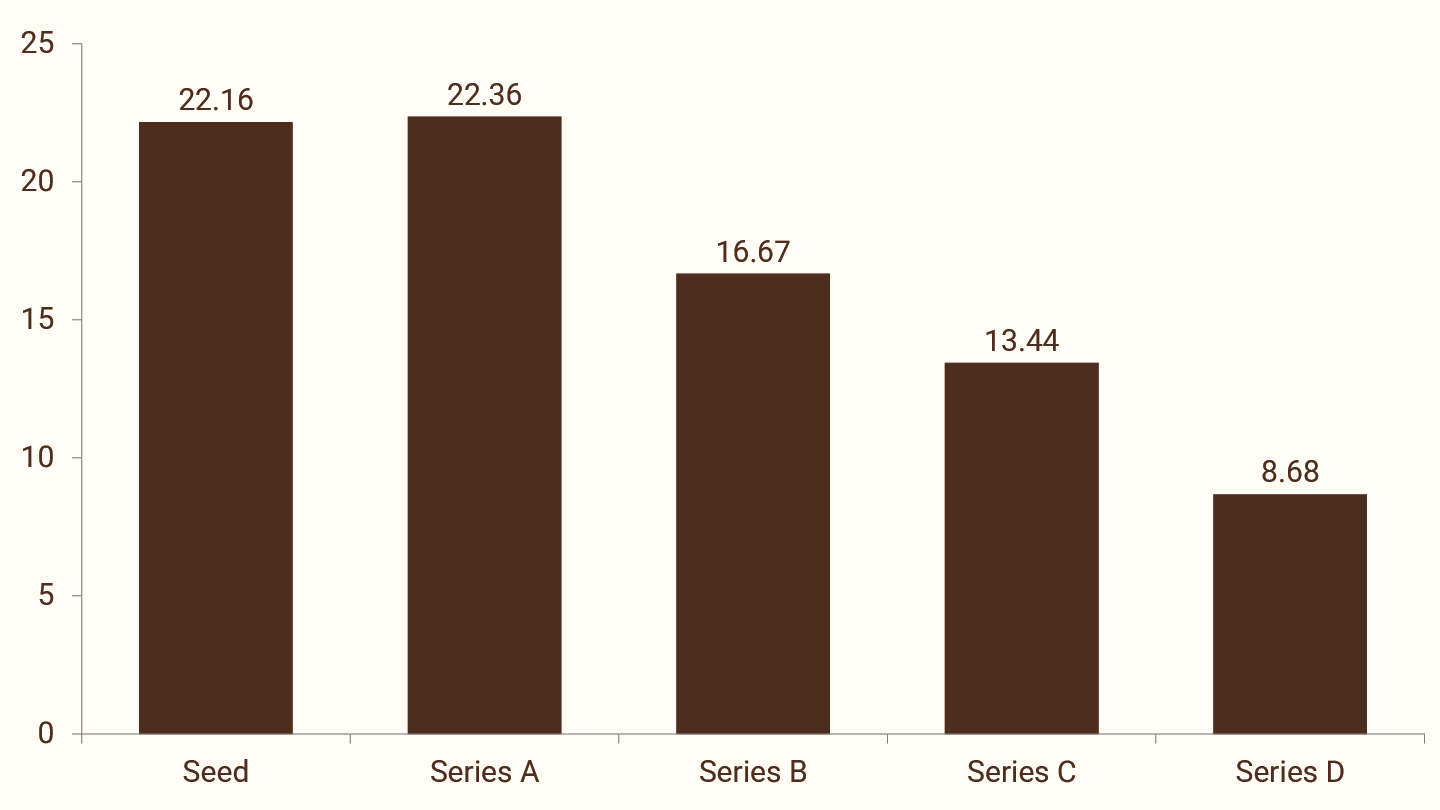
Median investor ownership acquired by series, U.S. venture capital (H1 2026)
Median U.S. investor ownership acquired by series (2026)
A bar graph displaying the median percentage of equity acquired by investors in funding rounds from seed stage to Series D, for U.S. venture capital deals. Data is from January-June 2026. Investors acquired the greatest share of a company at its earliest stages, with a median 22% of equity acquired at both seed stage and in Series A. From there, each successive round decreases the percentage acquired by investors: 17% in Series B, 13% in Series C and 9% in Series D. Source: PitchBook.
Source: PitchBook
Common ways to raise startup capital by stage
Your startup’s stage helps determine which funding options and investors are most relevant. Early-stage startups can access options such as accelerators, incubators and angel investors, while growth-stage startups typically require more capital, usually provided by firms with larger funds.
Early-stage startup funding options
At the beginning of a startup’s journey, founders can explore many avenues in the search for capital, such as:
- Friends and family
- Angel investors
- Crowdfunding (particularly in the consumer goods/retail space)
- Small Business Administration (SBA) loans
- Incubators/accelerators
- Bootstrapping—self-funding early operations without outside capital
As capital needs grow, a startup may need to raise a seed funding round, which is usually the first round of funding from professional investors. A seed round is generally less formal than later rounds, but the terms you agree to—valuation, dilution and board composition—set the baseline for everything that follows. At this stage, establishing the right banking infrastructure, including deposit accounts, payment systems and early credit facilities, helps demonstrate financial discipline to future investors.
What investors expect in a Series A round
The bar to raise a Series A round is usually higher than for earlier rounds, although dynamics vary with a startup’s progress and development. In the first half of 2026, the median Series A venture capital round in the U.S. was $20 million—more than six times the median seed round size, according to PitchBook data.
Larger amounts of capital mean more formal diligence. Series A investors typically review financial statements, the cap table and key contracts—not just the pitch deck. Before those meetings, be prepared to show clear evidence of traction, including:
- Revenue growth
- A growing customer base
- Official partnerships
- Positive unit economics
- Intellectual property protection, such as patents
Understanding typical deal sizes across funding stages can help you set realistic expectations and plan your strategy.
Median U.S. venture capital deal size by series (H1 2026)
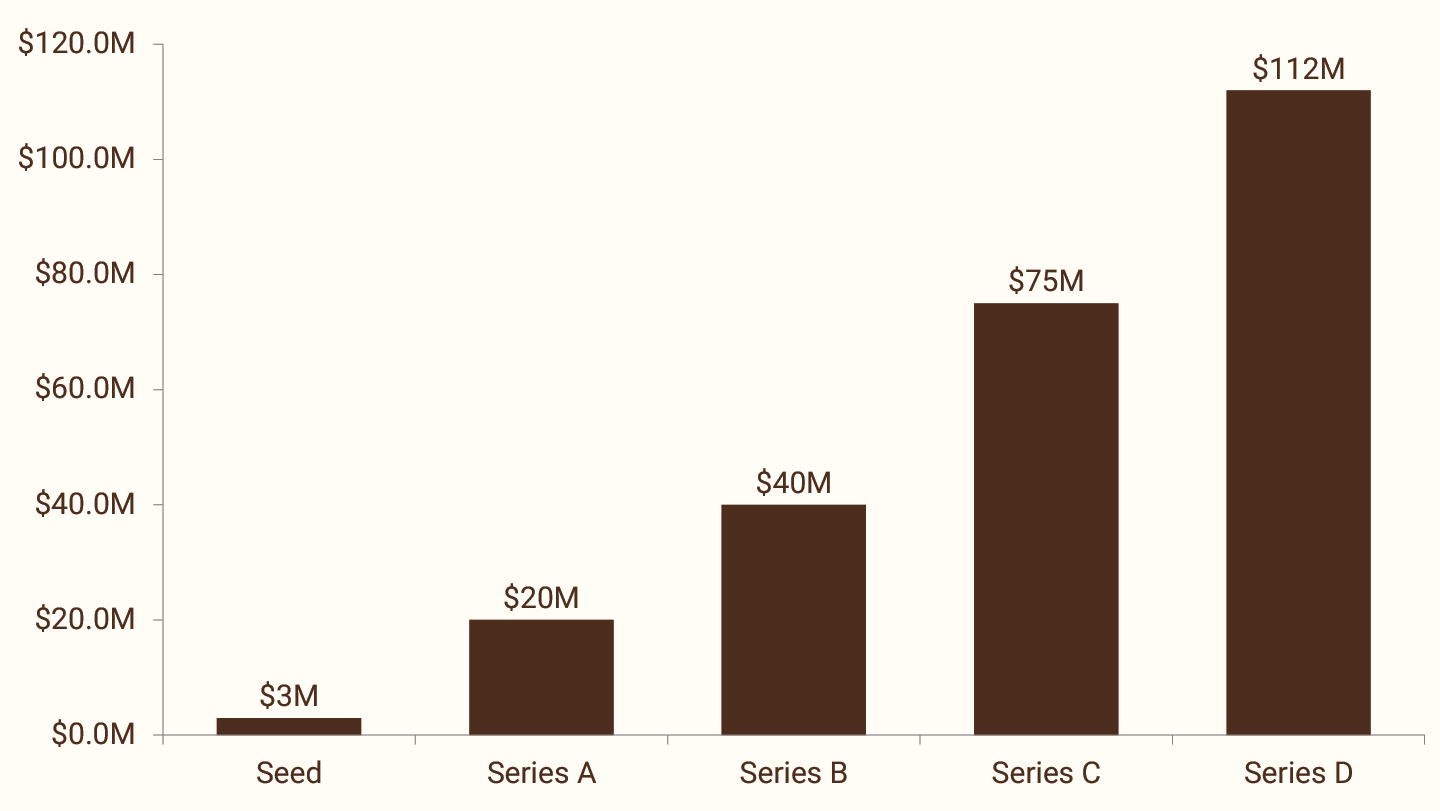
Median U.S. venture capital deal size by series (H1 2026)
The bar graph displays median deal size for seed stage through Series D U.S. venture capital deals in the first half of 2026. Median deal size is $3 million for seed deals, $20 million for Series A, $40 million for Series B, $75 million for Series C and $112 million for Series D. Source: PitchBook.
Source: PitchBook
Growth-stage startup funding options
As a startup develops, it typically requires larger rounds of capital. In the first half of 2026, the median U.S. venture capital deal size for a seed round was $3 million, while the median for Series D was $112 million. Funding options for growth-stage startups beyond traditional venture capital investors include:
- Non-traditional investors: In recent years, less traditional investors—such as asset managers, sovereign wealth funds and large private equity firms—have become more active in the venture capital ecosystem. Although funding from these investors has slowed, they can have a profound impact given the substantial sums they invest. Unlike traditional venture investors, they tend to be more hands-off and passive.
- Venture debt: Venture debt is an option for startups that have already raised equity capital. Unlike equity financing, it doesn’t dilute ownership. It’s typically provided by specialized lenders or banks that focus on startups.
How investors evaluate startups
As a startup matures, investor expectations rise. Early-stage investors focus primarily on the team, product and market opportunity. Later-stage investors scrutinize financial performance, the balance between growth and profitability, and your exit strategy. Preparing materials that address all three dimensions—regardless of your current stage—can shorten the time from first meeting to term sheet.
Before meeting with a potential investor, founders should prepare metrics and benchmarks that show how the business is performing. The most important vary by industry and sector, but common ones include:
- Annual recurring revenue growth
- Unit profitability
- Customer acquisition costs
- Churn
- Customer lifetime value
Tips for managing the fundraising process
- Know your startup’s unique offering, target markets and scalability. Investors need to understand your primary audience, the problem your product or service solves, and how your business can scale. Be equally clear on your financial model—how you generate revenue, what it costs to acquire a customer and what the path to profitability looks like.
- Build relationships before and during the fundraising process. A founder’s network is one of the most underutilized assets in fundraising. Warm introductions consistently outperform cold outreach, and a shared connection with a lead investor can significantly reduce the time to a first meeting. Startup-focused bankers may work alongside investors across the ecosystem and can facilitate introductions when the fit is right.
- Avoid burning bridges. Fundraising can involve setbacks, but the venture capital world is smaller than it may appear. Founders should aim to preserve relationships, even when a situation is difficult.
- Talk to many investors—and evaluate each one. Treat each conversation as two-way diligence. As investors assess your startup, you can determine whether an investor’s network, sector experience and working style are right for your company. Founders who approach fundraising as a relationship process, not a transaction, typically build stronger boards.
- Don’t take rejection personally. An investor passing on your round rarely reflects the quality of your company alone. Portfolio concentration, fund stage, sector focus and timing all influence the decision. A clear no today can keep the door open for the next round.
- Keep your finances in check. Investors ask for clean books, an organized cap table and clear revenue reporting before making a decision. Building those habits early—ideally before you begin fundraising—reduces diligence friction and signals operational maturity.
Build your future with J.P. Morgan
J.P. Morgan works with founders at every stage of the innovation economy—from building your initial banking infrastructure to navigating capital raises as your company scales. Learn more about J.P. Morgan Innovation Economy Startup Banking solutions.
JPMorgan Chase Bank, N.A. Member FDIC. Deposits held in non-U.S. branches are not FDIC insured. Non-deposit products are not FDIC insured. Visit jpmorgan.com/cb-disclaimer for disclosures and disclaimers related to this content.