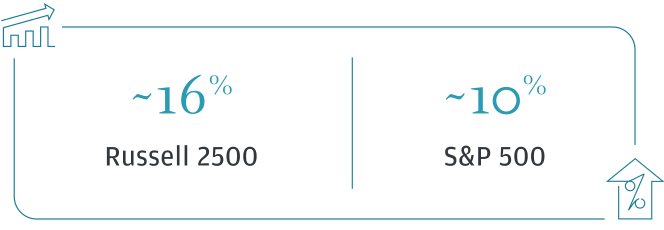
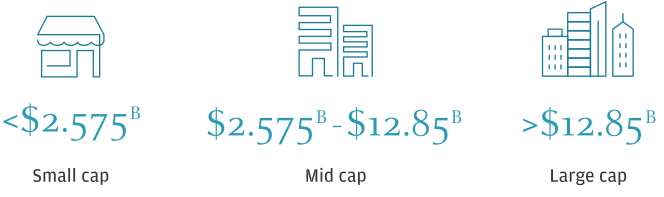
Ultimately, it’s important to note that the investment opportunity in SMID caps is relative to that offered by large caps. On an absolute return basis, there are several risk factors that warrant caution for investors in the short term.
For starters, the macro backdrop remains challenging: J.P. Morgan Global Research forecasts that interest rates will rise in the coming months, with the Federal Reserve hiking at its recent September meeting and the European Central Bank expected to follow suit in December. Plus, oil prices remain at around $100 per barrel, while a super El Niño could potentially add more downward pressure to growth and upward pressure to inflation through much of 2027.
In addition, there is no clear sector leader in the market at present:
- Tech: Tech stocks are already trading near highs despite mounting questions about the sustainability of the AI supercycle and its potential consequences (i.e. how AI might impact software companies, if AI capex can continue at its current pace and fears about AI’s impact on humanity).
- Financials: The sector has benefited from sticky inflation and a rising rates outlook, but valuations now look more demanding.
- Utilities, Staples and Telecom: These high-yield sectors — industry groups that consistently pay high cash dividends relative to their share price — could be vulnerable if rates move higher.
- Energy and Materials: These sectors are generally considered too small in terms of weight to meaningfully carry the broader index.
- Industrials: Many names are trading at or near historic highs given their exposure to today’s super cycles, leaving the sector looking expensive.
All things considered, J.P. Morgan Global Research maintains a positive stance on SMID caps versus large caps, while advising caution in the short term as the year-to-date rally could prove choppy or eventually stall. With all this in mind, selectivity is key, with stocks that have achievable estimates, undemanding valuations and earnings visibility preferred in the U.S. and Europe. “Our relative views on SMID caps versus large caps have delivered alpha year to date, and we see little reason to change them at this juncture,” Lecubarri said.