Putting our long-tenured investment teams on the line to earn the trust of institutional investors.
Direct access to market leading liquidity harnessed through world-class research, tools, data, and analytics.
Helping institutional investors, traditional and alternative asset and fund managers, broker dealers and equity issuers meet the demands of a rapidly evolving market.
Leveraging cutting-edge technology and innovative tools to bring clients industry-leading analysis and investment advice.
Helping hedge funds, asset managers and institutional investors meet the demands of a rapidly evolving market.
Global short-term fixed income strategies designed to help clients manage liquidity through the cycle.
Enhance your equity compensation offering with solutions designed to empower your employees and bring your reward strategy to life.
Explore a variety of insights.
Explore a variety of insights organized by different topics.
Explore a variety of insights organized by different types of content and media.
We aim to be the most respected financial services firm in the world, serving corporations and individuals in more than 100 countries.
Data-led insights for strategic decision making
Combining scientific, fact-based assessments and practical application, the Climate Intuition series highlights the impacts of climate change on strategic decision-making.
No results found
Adjust your filter selections to find what you’re looking for
“The future effects of climate change are impacting today’s bottom line. Success in the new climate era hinges on our ability to integrate climate considerations into daily decision-making. Those who adapt will lead, while others risk falling behind.”
Dr. Sarah Kapnick
Global Head of Climate Advisory, J.P. Morgan
Dr. Sarah B. Kapnick is the global head of Climate Advisory at J.P. Morgan. In this role, she advises the bank’s clients on climate, energy, biodiversity and sustainability topics. Responsible for overseeing the firm’s climate thought leadership strategy, Dr. Kapnick leverages extensive technical and scientific expertise to drive content strategy and advise clients at the intersection of finance, climate science, commerce and national security. She has received several recognitions for her work at J.P. Morgan and “Climate Intuition” series, including being named to the 2025 TIME100 Climate and Bloomberg Green “Ones to Watch” lists.
She was previously with the bank’s Asset and Wealth Management division as senior climate scientist and sustainability strategist.
Prior to her current role, Dr. Kapnick was chief scientist at the U.S. National Oceanic and Atmospheric Administration (NOAA), responsible for guiding the programmatic focus of NOAA’s science and technology priorities. She spent a decade at NOAA’s Geophysical Fluid Dynamics Laboratory (GFDL) leading research on seasonal climate prediction, mountain snowpack, extreme storms, water security, climate economics and climate impacts.
Dr. Kapnick earned a PhD in atmospheric and oceanic sciences with a certificate in Leaders in Sustainability from UCLA and an AB in mathematics with a certificate in finance from Princeton University.
Insights
| 1:26
The shifting winds of farming and trade — and what it means for the future
Dr. Sarah Kapnick breaks down the global state of agriculture and trade, the risks inherent in current practices and the strategies countries and corporates are exploring to manage risk and build toward food security.
| 1:26
The shifting winds of farming and trade — and what it means for the future
Dr. Sarah Kapnick breaks down the global state of agriculture and trade, the risks inherent in current practices and the strategies countries and corporates are exploring to manage risk and build toward food security.
| 1:24
The New Era of Energy Security
Dr. Sarah Kapnick explains how evolving energy strategies and global cooperation are transforming the geopolitical landscape.
| 1:24
The New Era of Energy Security
Dr. Sarah Kapnick explains how evolving energy strategies and global cooperation are transforming the geopolitical landscape.
Dr. Sarah Kapnick:
Energy security right now is being seen through this national security lens. It's being driven by increased demand for power, mainly driven by AI, and this expectation that because AI could fundamentally transform the economy, having the energy to power AI is going to become completely fundamental to economic growth. And so with that, countries are thinking through being able to expand their energy supply at this point in time and are really looking across all of their natural resources to ensure that they're able to meet that. As a result, that's led to an interest in building out different types of technologies to be able to be self-sufficient for energy. That has resulted in advancements in solar power and wind power and now a resurgence in trying to have new technologies and new capabilities in nuclear power. And this is happening around the world. In addition to trading of energy technologies and raw materials to be able to produce energy, we're also starting to see cooperation happening around the electricity grid. We're seeing this happen in Africa, we're seeing it in Asia, and we're seeing it in the Middle East right now, where now neighbors are forming chains around their grids, which is now partnering their economies and making them closer together, because now they are going to be reliant on their neighbors for energy production to be able to power their economies.
END
| 12:28
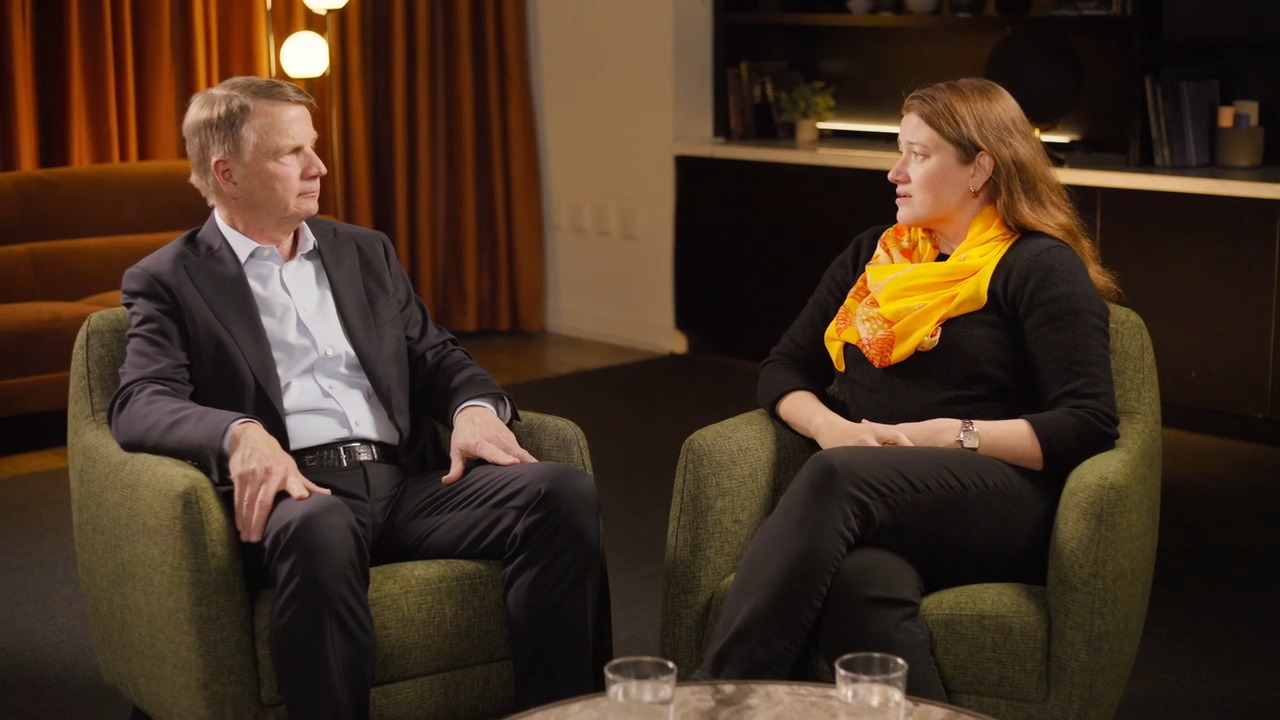
In this conversation, Dr. Sarah Kapnick, global head of Climate Advisory, and Michael Johnson, Security and Resiliency Initiative lead for Energy and the U.S. Government, discuss the need for new sources of energy, challenges across the supply chain and industry dealmaking trends.
| 12:28
In this conversation, Dr. Sarah Kapnick, global head of Climate Advisory, and Michael Johnson, Security and Resiliency Initiative lead for Energy and the U.S. Government, discuss the need for new sources of energy, challenges across the supply chain and industry dealmaking trends.
Dr. Sarah Kapnick:
With matters in national security, you want to make sure that you have resilience against multiple different scenarios. And so a diversified energy mix is really important for making sure that you have that diversity in all of your supply chains, but also all the energy that's coming onto the grid.
Michael Johnson:
So the Security and Resiliency Initiative, which we call SRI, is a commitment on two fronts. It's a trillion-and-a-half-dollar commitment to facilitate and finance and invest in companies over the next 10 years that fall within security and resiliency in secure supply chains, in defense, in energy, in frontier technologies, and in pharma and healthcare.
Dr. Sarah Kapnick:
I find it's really important for the future of innovation of science and technology being commercialized because these new technologies, they're capital intensive. The SRI initiative is going to be so important for scaling these types of companies and really allowing them to grow so then we have access to those technologies. And all of the different areas that we're focused on funding and financing, they are what we will need in this changing world going forward. We need new types of pharma. We need new sources of energy. We need more resilient grids. We need quantum and other computing capabilities because that is the future that will drive economies. And so I'm really excited about all the activities that we're doing because we're really supporting the future of the economy.
Michael Johnson:
The scaling is such a great point. The trillion and a half dollars over 10 years, we would've already done a trillion dollars of activity, just our normal business, but we added 50% or $500 billion of additional scaling. And that's exactly because of what you said. It's that capital intensity of all these businesses that need it.
Dr. Sarah Kapnick:
Yeah. And if the private sector doesn't support these things, we will not see that growth and we will not see that innovation. So I'm hopeful that doing this is going to accelerate all that innovation and accelerate the economy in ways that otherwise wouldn't have happened if we had not made this initiative.
Michael Johnson:
So data centers in the US will start there, have been playing what I call a game of musical chairs for the last two years. And that's going around the country and finding spots of excess power because our grid, as you know, there's not one grid. There are many small grids and there are different levels of usage. And they were able to find places in Columbus, Ohio or Atlanta, Georgia, or Fort Worth, Texas that had latent power that was excess power and they could sign a 15-year contract and build it. That's all taken up. All the excess is gone. And now the real challenge is they have to bring power with them.
Dr. Sarah Kapnick:
Yeah, I agree. It was a race to collect all the low hanging fruit. And now people are realizing they really need to think about the planning in ways that they haven't previously. And so now we're going to see more interesting financing. We're going to see new technologies brought online. We're going to see new types of companies that haven't existed before that are going to try and piece together all those problems to be able to bring the energy online.
Michael Johnson:
I think we both know natural gas is going to be one of the biggest sources in the near term. And then they'll layer in solar and wind to decarbonize that and to add electrons. And then longer term, I think starting in 2030, really ramping up 2035, we'll have nuclear really kicking into the grid.
Dr. Sarah Kapnick:
Storage has been incredibly important in the recent years to also bring that online in Texas. That is where storage has been being put onto the grid to be able to take all that excess also from when the wind blows for then when the energy is needed, and same with solar. And that will be really important with these data centers as they're trying to bring it on with renewable energy sources on site as well. And also for the backup power when there's grid intermittency problems, because those data centers need power all the time. And so those will be put in place also to ensure that they have that steady power that they are needed.
Michael Johnson:
The storage, I agree with you, and it's being added like crazy every day, but they still can't get storage to be much longer than four hours. Is that right?
Dr. Sarah Kapnick:
There are a couple early-stage companies, and that's part of the reason SRI is so important, is that there are early companies that are out there that are starting to be built and they're building their first factories for storage that goes out to a hundred hours. And so those need to be built up and they're CapEx intensive. And I think we're going to see more of these companies available and making that later stage with the investments and they need to be deployed because the demand is there for more than four hours. A diversified energy mix is really important for ensuring that you actually can get all the electrons on the grid, but also as you are trying to balance the loads from the different energy sources, it allows for being able to ensure that you can have all that energy continuously and meeting the demand and the demand through many different times when you have extreme weather of heat, when you have cold, you have to actually have that full mix to be able to make sure that you're bringing enough onto the grid and being able to balance all of that as that's coming online.
Michael Johnson:
It is a balancing act. It's amazing to me that grids keep producing with all the demands and all the changes and all the weather, but I'm curious, the point you made about all the sources, how do you feel about dispatchable twenty-four seven energy versus intermittent energy and how they play into the mix?
Dr. Sarah Kapnick:
Well, I see it as a scientist. It's a big science question, an optimization problem of being able to get all those different sources on. And historically with the grid, as you were saying, dispatchable and twenty-four seven, there were certain types of energy that it was really fossil fuel based where you had to have it where you could fire it up, fire it down. But now when we have all these different sources, but also new grid technologies, you can have the baseload power with nuclear, you can have wind, you can have solar, you end up now having storage coming online in larger quantities because they're trying to be able to match it for when you have supply versus when you have demand. And as more technology of smart technology for grid management becomes available, you integrate all of those in to be able to actually use the sources of the energy that you have on the grid.
Michael Johnson:
The most exciting things in dispatchable energy, you know I believe this, geothermal, right? I really think it's time has come and it's been promised for a long time, but the new methodology, the new technology really are going to break through I think finally. So that's one of the most exciting developments. The other one, of course, is nuclear, which has been long the promised land. And I'm curious if you agree with this. When my kids ask me, how are we really going to reduce carbon emissions? I say one of the best solutions is broad use of nuclear.
Dr. Sarah Kapnick:
Oh, I agree. And it's starting to come back with people are very excited about nuclear and the future of that technology. I'll also add on geothermal. Part of this unlocking is where technology is and being able to drill further down and being able to drill horizontal wells. That is being able to place geothermal in places where we haven't had geothermal before. And so instead of just being in those tectonically active places where geothermal has traditionally been, you're going to be able to unlock the capability across many more land spaces around the United States, but also globally. With matters of national security, you want to make sure that you have resilience against multiple different scenarios. And so a diversified energy mix is really important for making sure that you have that diversity in all of your supply chains, but also all the energy that's coming onto the grid. And that protects against trade issues. It protects against supply chain issues. For renewables, sometimes it also protects against certain types of weather. And so you have that layering of these different types of energy that allow for it to be continuously available so you don't have any of those weak links that could lead to blackouts and brownouts.
Michael Johnson:
I totally agree. Think of if you've only had gas when Uri hit in Texas, you just would've had no power, which they had for a short amount of time. So sometimes wind and solar pick up the slack, sometimes gas picks up, gas fired power picks up the slack. And I also think that a diversified source actually helps internationally because think about the generation growth that we've had in this country from solar. That actually allows us to export more gas, which helps the allies.
Dr. Sarah Kapnick:
Well, and I'm also seeing it outside the United States. There's an interest in self-sufficiency of energy. And so there's this push towards development of renewables, development of storage so that they're no longer beholden to volatility for certain types of energy, but then also to be able to produce their own and not have to rely on imports continuously. But that's once they have the infrastructure in place. And the trading partner diversity matters then for what's actually being built as well.
Michael Johnson:
Remember when energy independence was a pipe dream and a joke in this country? We just really never thought it could happen, and then it happened. Clients tell me, if you give the engineers enough time and enough money, they will figure it out. And we've seen that happen.
Dr. Sarah Kapnick:
Oh, as a scientist, I completely agree with that statement.
Michael Johnson:
In deal making, what we're seeing is consolidation with different kinds of energy. So think of companies that are big nuclear producers buying natural gas so that now they can- Why is that? So that they can just provide more forms of energy. If you're good at natural gas, you can stand up new generation quickly, and if you're good at nuclear, you can stand up low carbon generation for the long run. So the same companies are combining to be able to do both of those.
Dr. Sarah Kapnick:
And is that because of the complexity of the grid that they're trying to generate energy of different types and have control across that? Why is it that they would do that?
Michael Johnson:
It's partly because, to be honest, their economies of scale, big companies can usually become more efficient.
Dr. Sarah Kapnick:
So it's really a big infrastructure play of being able to build all this out at once.
Michael Johnson:
The other thing that we've done, especially as we staff up SRI, is we're starting to tackle the supply chains behind the supply chains, behind the supply chains. And we're going to companies that we're saying, "What are you worried about? " You need to build automobiles, right? What are you worried about? What supplies? What things are you worried? Everybody knows about rare earth magnets. Can't make a car without rare earth magnets, but what else is in the supply chain? And many of the things, tool dyes and things like that are made by small companies, and that's where SRI comes in. We're going to reach all the way down to those and help those.
Dr. Sarah Kapnick:
Yeah. I see this in the way that you're describing it. We're widening the aperture to understand where everything is coming from to make sure that everything fits together so we can be able to do this and build the cars, build whatever it needs to be built.
Michael Johnson:
One of the things we've done that we are very proud of is to help bring to the US shores this giant zinc smelter that's going to create and produce 11 of the 13 critical minerals that we're short of.
Dr. Sarah Kapnick:
Critical minerals are really important for energy resiliency because they are the building blocks for being able to build most energy types. It's important for the wires and the transmission. It's important for solar cell development. It's important for wind. It's important for nuclear. We actually don't have access to many of the minerals that we need to be able to build out the energy of the future unless we start having access to those supplies.
Michael Johnson:
I agree. As we've started to dig into this, now I'm learning, I really need a periodic table on my wall because I'm learning about all these things that I never knew were so important. You can't make an airplane without Scandium. You need bismuth and antimony and germanium and gallium and all these elements that are critical for things we use every day.
As data centers and electrification increase power demand, energy resiliency and a diversified energy mix are becoming even more crucial to national security. In this conversation, Dr. Sarah Kapnick, global head of Climate Advisory, and Michael Johnson, Security and Resiliency Initiative lead for Energy and the U.S. Government, discuss the need for new sources of energy, challenges across the supply chain and industry dealmaking trends.
Security and Resiliency in Action: Supercharging the energy supply chain
[Music]
Caitlin Ludwig: Hello, Making Sense listeners. You're listening to the first episode of our Security and Resiliency in Action series, where we unpack the big moves and macro trends shaping our economic future. Over the course of this series, JPMorgan experts will cover industries that are critical to national security and resiliency, including energy, healthcare, pharma, manufacturing, defense, and technology. In this first episode, we're covering all things energy, why energy demand is on the rise, the need for new energy sources, supply chain challenges, and how industry deal making is evolving. We'll hear from Dr. Sarah Kapnick, Global Head of Climate Advisory, and Michael Johnson, Security and Resiliency Lead for Energy and the US government. If you'd like to learn more about the Security and Resiliency Initiative, visit jpmorgan.com/SRI. So with that, let's jump into the conversation.
Michael Johnson: So the Security and Resiliency Initiative, which we call SRI, is a commitment on two fronts. It's a trillion and a half dollar commitment to facilitate and finance and invest in companies over the next 10 years that fall within security and resiliency in secure supply chains, in defense, and energy, and frontier technologies, and in pharma and healthcare.
Sarah Kapnick: I find it's really important for the future of innovation of science and technology being commercialized because these new technologies, they're capital intensive. The SRI initiative is going to be so important for scaling these types of companies and really allowing them to grow so then we have access to those technologies. And all of the different areas that we're focused on funding and financing, they are what we will need in this changing world going forward. We need new types of pharma. We need new sources of energy. We need more resilient grids. We need quantum and other computing capabilities because that is the future that will drive economies. And so I'm really excited about all the activities that we're doing because we're really supporting the future of the economy.
Michael Johnson: The scaling is such a great point. Um, the trillion and a half dollars over 10 years, we would have already done a trillion dollars of activity, just our normal business, but we added 50% or $500 billion of additional scaling, and that's exactly because of what you said. It's that capital intensity of all these businesses that need it.
Sarah Kapnick: Yeah. And if the private sector doesn't support these things, we will not see that growth. We will not see that innovation. So I'm hopeful that doing this is going to accelerate all that innovation, accelerate the economy in ways that otherwise wouldn't have happened if we had not made this initiative.
Michael Johnson: So data centers in the US, we'll start there, have been playing what I call a game of musical chairs for the last two years, and that's going around the country and finding spots of excess power.
Sarah Kapnick: Mm-hmm.
Michael Johnson: 'Cause our grid, as you know, there's not one grid, there are many small grids, and there are different levels of usage, and they were able to find places in Columbus, Ohio, or Atlanta, Georgia, uh, or Fort Worth, Texas that had latent power, that was excess power, and they could sign a 15-year contract and build it. That's all taken up. All the excess is gone, and now the real challenge is they have to bring power with them.
Sarah Kapnick: Yeah, I agree. It was a race to collect all the low hanging fruit, and now people are realizing they really need to think about the planning in ways that they haven't previously. And so now we're going to see more interesting financing. We're going to see new technologies brought online. We're going to see new types of companies that haven't existed before that are going to try and piece together all those problems to be able to bring the energy online.
Michael Johnson: I think we both know natural gas is gonna be one of the biggest sources in the near term, and then they'll layer in solar and wind to decarbonize that and to add electrons. And then longer term, I think starting in 2030, really ramping up 2035, uh, we'll have nuclear really kicking into the grid.
Sarah Kapnick: Storage has been incredibly important in the recent years to also bring that line in Texas. That is where storage has been being put onto the grid, to be able to take all that excess also from when the wind blows for when it, then when the energy is needed. And the same with solar. And that will be really important with these data centers as they're trying to bring it on with renewable energy sources on site as well. And also for the backup power when there's greater intermittency problems, because those data centers need power all the time. And so those will be put in place also to ensure that they have that steady power that they are needed.
Michael Johnson: The storage, I agree with you, and it's being added like crazy every day, but they still can't get storage to be much longer than four hours. Is that right?
Sarah Kapnick: There are a couple early stage companies, and that's part of the reason SRI is so important, is that there are early companies that are out there that are starting to be built, and they're building their first factories for storage that goes out to 100 hours. And so those need to be built up and they're CapEx intensive. And I think we're going to see more of these companies available and making that later stage, um, with the investments, and they need to be deployed, um, because the demand is there for more than four hours. A diversified energy mix is really important for ensuring that you actually can get all the electrons on the grid, but also as you are trying to balance the loads from the different energy sources, it allows for being able to ensure that you can have all that energy continuously in meeting the demand, and the demand through many different times when you have extreme weather of heat, when you have cold, you have to actually have that full mix to be able to make sure that you're bringing enough onto the grid, and being able to balance all of that as that's coming online.
Michael Johnson: It is a balancing act. It's, it's amazing to me that grids keep producing with all the demands and all the changes and all the weather. But I'm curious, the point you made about all the sources, how do you feel about dispatchable 24/7 energy versus intermittent energy and how they play into the mix?
Sarah Kapnick: Well, I see it as a scientist. It's a big science question, an optimization problem of being able to get all those different sources on. And, you know, historically with the grid, as you were saying, dispatchable and 24/7, there were certain types of energy that it was really fossil fuel based where you had to have it where you could fire it up, fire it down. But now when we have all these different sources, but also new grid technologies, you can have the baseload power with nuclear, you can have wind, you can have solar, you end up now having storage coming online in larger quantities because they're trying to be able to match it for when you have supply versus when you have demand. And as more technology of smart technology for grid management come- becomes available, you integrate all of those in to be able to actually use the sources of the energy that you have on the grid.
Michael Johnson: The most exciting things in dispatchable energy, you know, I believe this geothermal.
Sarah Kapnick: Mm-hmm.
Michael Johnson: Right? I really think it's time has come and it's been promised for a long time. But the new methodology, the new technology really are gonna break through, I think, finally. Uh, so that's one of the most exciting developments. The other one, of course, is nuclear, which has been long the promised land. And I'm curious if you agree with this. When my kids ask me, "How are we really gonna reduce carbon emissions," I say one of the best solutions is broad use of nuclear.
Sarah Kapnick: Oh, I agree. And it's starting to come back with people are very excited about nuclear and the future of that technology. I'll also add on geothermal. Part of this unlocking is where technology is and being able to drill f- further down and being able to drill horizontal wells. That is being able to place geothermal in places where we haven't had geothermal before. And so instead of just being in those tectonically active places where geothermal has traditionally been, you're going to be able to unlock the capability across many more land spaces around the United States, but also globally. With matters of national security, you want to make sure that you have resilience against multiple different scenarios. And so a diversified energy mix is really important for making sure that you have that diversity in all of your supply chains, but also all the energy that's coming onto the grid. And that protects against trade issues, it protects against supply chain issues. For renewables, sometimes it also protects against certain types of weather. And so you have that layering of these different types of energy that allow for it to be continuously available so you don't have any of those weak links that could lead to blackouts and brown outs.
Michael Johnson: I totally agree. Think of, think of if you've only had gas when Uri hit in Texas, you, you just would have had no power, which they had for a short amount of time. So sometimes wind and solar pick up the slack, sometimes gas picks up, gas fired power picks up the slack. And I also think that a diversified source actually helps internationally, 'cause think about the generation growth that we've had in this country from solar. That actually allows us to export more gas, which helps the allies.
Sarah Kapnick: Well, and I'm also seeing it outside the United States. There's an interest in self-sufficiency of energy. And so there's this push towards development of renewables, development of storage so that they're no longer beholden to volatility for certain types of energy, but then also to be able to produce their own and not have to rely on imports continuously, but that's once they have the infrastructure in place. And the trading partner diversity matters then for what's actually being built as well.
Michael Johnson: Remember when energy independence was a pipe dream and a joke in this country?
Sarah Kapnick: Mm-hmm.
Michael Johnson: Like we just really never thought it could happen, and then it happened. It's, you know ... People, clients tell me, "If you give the engineers enough time and enough money, they will figure it out," and we've seen that happen.
Sarah Kapnick: Oh, as a scientist, I completely agree with that statement.
Michael Johnson: In deal making, what we're seeing is consolidation with different kinds of energy. So think of companies that are big nuclear producers buying natural gas, so that now they can-
Sarah Kapnick: Why is that?
Michael Johnson: That, so that they can just provide more forms of energy. If you're good at natural gas, you can stand up new generation quickly. And if you're good at nuclear, you can stand up low carbon generation for the long run. So the same companies are combining to be able to do both of those.
Sarah Kapnick: And is that because of the complexity of the grid, that they're trying to generate energy of different types and have control across that? Why is it that they would do that?
Michael Johnson: It's, it's partly because, to be honest, they're economies of scale. Big companies can usually become more efficient.
Sarah Kapnick: So it's really a big infrastructure play of being able to build all this out at once.
Michael Johnson: The other thing that we've done, especially as we staff up SRI, is we're starting to tackle the supply chains behind the supply chains, behind the supply chains, and we're going to companies who we're saying, "What are you worried about?" You know, you, you need to build, you know, you need to build automobiles, right?
Sarah Kapnick: Mm-hmm.
Michael Johnson: What are you worried about? What supplies, what things are you worried ... Everybody knows about rare earth magnets. Can't make a car without rare earth magnets, but what else is in the supply chain? And many of the things, you know, tool dies and things like that are made by small companies, and that's where SRI comes in. We're gonna reach all the way down to those and help those.
Sarah Kapnick: Yeah. I see this in the way you're describing it, we're widening the aperture to understand where, where everything is coming from to make sure that everything fits together so we can be able to do this and build, build the cars, build whatever needs to be built.
Michael Johnson: One of the things we've done that we are very proud of is to help bring to the US shores this giant zinc smelter that's gonna create and produce 11 of the 13 critical minerals that we're short of.
Sarah Kapnick: Critical minerals are really important for energy resiliency because they are the building blocks for being able to build most energy types. It's important for the wires and the transmission. It's important for solar cell development. It's important for wind. It's important for nuclear. We actually don't have access to many of the minerals that we need to be able to build out the energy of the future unless we start having access to those supplies.
Michael Johnson: I agree. As we've started to dig into this, now I'm learning, I need, I really need a periodic table on my wall because I'm learning about all these things that I never knew were so important. You, you can't make an airplane without scandium, right?
Sarah Kapnick: Mm-hmm.
Michael Johnson: We, you need, you know, bismuth and antimony and germanium and gallium, and all these elements that are critical for things we use every day.
[Music]
Voiceover: Thanks for listening to JP Morgan's Making Sense. If you've enjoyed this conversation, share your feedback by leaving a comment or review wherever you listen to podcasts. And be sure to follow our channel so you don't miss an episode.
This material was prepared by certain personnel at the Investment Banking Group of JPMorgan Chase & Co. and its affiliates and subsidiaries worldwide, and not the firm's research department. It is for informational purposes only. It is not intended as an offer or solicitation for the purchase, sale, or tender of any financial instrument and does not constitute a commitment, undertaking offer, or solicitation by any JP Morgan Chase entity to extend or arrange credit or provide any other products or services to any person or entity.
Copyright 2026, JPMorgan Chase & Co., all rights reserved.
[End of episode]
In this episode of Making Sense, Chuka Umunna sits down with Dr. Sarah Kapnick, global head of Climate Advisory, and James Janoskey, global co‑head of Natural Resources Investment Banking, to unpack how clean technologies are reshaping the global energy landscape. They explore surging electricity demand from AI data centers, the modernization of aging grids, the nuclear renaissance and the rise of long‑duration storage beyond lithium. The conversation also explores the intersection of energy security and geopolitics — how has the ongoing situation in the Middle East amplified concerns around grid resilience?
Why clean tech companies are critical for energy security
[Music]
Sarah Kapnick: AI is driving demand for energy, so new energy on the grid for AI. And part of this is an expectation that AI will provide us with the future of innovation and the future of the economy. And so energy security meeting that growing demand is economic security going forward. And so it requires thinking through how you are going to actually achieve that in the short term and long term.
Chuka Umunna: Hello, and welcome to J.P. Morgan's Making Sense. I'm Chuka Umunna, Global Head of Corporate Governance and Sustainable Solutions here in London, and it's a real pleasure to be your host today. Wow! We are living through what could be considered one of the most fascinating and frankly worrying though consequential periods in history. We're going to focus today in particular on the global energy landscape, the energy transition, the geopolitics shaping it, capital flows and technologies driving it. All of these are converging in ways that demand careful analysis and clear-eyed thinking. To help pick up these themes, unpack them, I'm joined by two wonderful colleagues who bring genuinely distinctive perspectives to this conversation. First, Dr. Sarah Kapnick. Sarah is our Global Head of Climate Advisory, and before joining us, she served as Chief Scientist at the National Oceanic and Atmospheric Administration, commonly known as NOAA, in the U.S., where she advised on climate science, weather forecasting, and environmental policy at the highest levels. She brings a deep scientific lens to these questions we'll be exploring today. Sarah, great to have you with us.
Sarah Kapnick: Thank you so much for having me here.
Chuka Umunna: And alongside Sarah, I'd like to introduce James Janoskey, JJ to us. He is our Global Co-Head of JPMorgan's Natural Resources Investment Banking Group and leads much of our investment banking work across the clean technology and energy transition space. He has unprecedented access to the companies, investors, and institutions at the forefront of building the energy system of the future. And James, I mean, look, I suppose you've had a front-row view of where capital is flowing and subsequently where the market is heading. It's great to have you here with us, too.
James Janoskey: Good to see you, Chuka. Glad to do this again this year, and Sarah, with you, too.
Chuka Umunna: Well, look, let's go big picture first and look at what's happening with the energy transition generally. But also, I mean, you've got to look at it in the context of geopolitics. But perhaps if we just focus on, I mean, there's a lot to cover. So let's just start off perhaps by focusing on the progress, the trajectory. And JJ, if I just perhaps come to you, what is your analysis of how this energy transition is moving in terms of the scale, the speed? How do you think the narrative has moved or changed over the last 12 months?
James Janoskey: Probably we look back more than 12 months just to put this in context. So if we go back five, six years, when COVID started, energy transition, ESG, net zero by 2050. And everyone was talking about 2030. Since that time, we've had COVID. We had the ongoing Ukraine conflict, which then changed things about energy security became more important. We had Liberation Day, which changed global trade. And now we have the Middle East conflict. One thing that's come out of that, though, is that energy is now about energy security, energy affordability, energy resiliency, with megatrends going on where the world needs more energy because of what's happening between electrification, AI, data centers. The important point with that as a backdrop, the energy transition is still happening. And it's accelerated, in fact, over the last several years. In 2025, $2.9 trillion was invested in global transition, low carbon, it's a record. So we see the trend every year, it's year over year, it's going. But it's important to think about this now as a very pragmatic debate from companies, investors, and even politicians about where does capital go? How do we do it in the right way? Where is there an economic reason? Or if the governments need to put capital and policies in place to jumpstart things that's happening. It feels more balanced now, but with momentum, we have a lot more to do. We should be investing between five and $7 trillion a year if we think about net zero for 2050. But at least things are moving in the right direction. So optimistic that this continues.
Chuka Umunna: I mean, you say actually, I mean, I think the debate has become more sophisticated, more healthy, and less polarized, if you like, because it's become more holistic. So your energy security is the other side of the coin to sustainability, but then also opens up the various other topics too. Whereas two years ago, it was kind of like, are you denying that this is an issue that needs to be dealt with? Or are you fundamentalist about it? But actually, it's in a better place now.
James Janoskey: It's been able for companies and for investors to have a bit more line of sight and clarity about what works, what doesn't work? Where should we be investing? Where do corporates have confidence? Where do boards have confidence? And there's some winners and there's some losers right now doesn't mean that's how it stays. But there's a bit of filtering out. But the key topics that come out of this because of that is just a more pragmatic, as you say, Chuka, but also just more focused approach about putting capital to work. And investors are still there to support the right stories that have the right type of return profile.
Sarah Kapnick: And I'll add to that, that a few years ago, people were making their goals of where they wanted to be. And they were putting those out without necessarily thinking through the technologies and the costs and all the ways that they would get there. And so I'm seeing a reset where companies and executives are really thinking through what can I do? What has the return on investment today? What has the return on investment over a five-year time horizon? And then making those plans for that spend over time to get to where they want to be. And so they're making these multi-year plans that are much more, as you said, pragmatic, but they actually have the roadmap to get there now.
Chuka Umunna: And what about, I mean, Sarah just coming to you from a government perspective, you talked about companies there, but thinking about how governments are looking at the energy security issue and how you cannot get away from the geopolitics, particularly when we look at, for example, the ongoing situation in the Middle East, the Iran conflict. If you were back at the White House, I mean, in many respects, it seems to me that in your previous role, that has become a role that is closer to the center of power, closer to the decision-making about geopolitics, none more so given recent events. What would you be saying to the President now about the intersection of these two issues, energy security and geopolitics?
Sarah Kapnick: What I would be saying in the U.S. or even actually for any government in Europe right now, I would be saying to have plans for how you are going to produce the power that you need to meet the challenges of today. So as we touched on earlier, AI is driving demand for energy, so new energy on the grid for AI. And part of this is an expectation that AI will provide us with the future of innovation and the future of the economy. And so energy security meeting that growing demand is economic security going forward. And so it requires thinking through how you are going to actually achieve that in the short term and long term. And then additionally, there are growing physical risks around the grid. There's a need to be thinking about extreme weather and climate change, which we see here in Europe in the planning that is happening, particularly in the Mediterranean region around wildfires. In Northern Europe, concerns about extreme flooding that we've seen in recent years. And so it's planning for those physical risks. And then because of conflict far away from Europe, it's also considering cybersecurity risks, because that is how you end up bringing conflict back onto shores. And so thinking through those physical risks, thinking through how to make that grid secure, how to be able to build it out is of the utmost importance right now and going forward to ensure economic security long term.
Chuka Umunna: And let's perhaps just swing in and focus on some of the key sectors and technologies here. And JJ, if I could just turn to you on nuclear, because of course, I mean, this has been the debate here in Europe, particularly about nuclear has swung from one extreme of let's just take this out of the system altogether to another extreme, which is we can't bring this back on stream fast enough. Is that a picture that you recognize? And how are clients approaching nuclear both from a corporate and investor standpoint?
James Janoskey: It's very fair. It was not in my backyard. Let's shut them down. Going back to the green agenda to the point now, as you say, with energy security, they need to be part of the mix. I would say generally nuclear is having a renaissance in the Western world. It was already present. China was already pushing forward on nuclear. But the West is definitely catching up. I would argue the U.S. with the current administration has made nuclear a big focus of energy security and advancing nuclear industry broadly in the U.S. That's all forms of nuclear. And as Sarah said, particularly now thinking about how you build a supply chain so you can be more self-sufficient. Europe, it has momentum and it has green shoots. It's important for the audience and just thinking about nuclear, there's three types of nuclear broadly. There's traditional nuclear, which are the big nuclear plants you've seen. SMRs, which are not a science project, but they're a scaling up an economic point because there is technology that exists. There are some SMRs being built, but how do you do it economically? And then more of a science project is fusion. Then what happens around fusion? And there's capital going to all three of those. We've seen larger dollar amounts go into the sector in North America. We're starting to see green shoots here. And we've also seen, importantly, France has made comments, Sweden's made comments, Germany, Slovakia, Romania, the U.K. government. So there are government support for it to revisit it and see if they can help accelerate it. So it'll definitely be part of the energy mix going forward. The question is how big and scalable will be in Europe still to be seen.
Chuka Umunna: And then, of course, the timing, because Europe needs alternative sources now.
James Janoskey: This is 10 years away for most of these to get scaled up and get built.
Sarah Kapnick: Yeah. And I'm excited about all the technologies around the SMR technologies, but also the micro-reactors that get smaller. There's more of a focus here in Europe than in other parts of the world around building those out for being able to create distributed grids, but also potentially for transportation, really ocean faring transportation, but also potentially space, that it's much more advanced here in terms of the technologies that are coming out. And so we'll see how those scale and then how they might support the future of ocean transportation, but also aerospace goals of Europe.
Chuka Umunna: And what about, I mean, just in terms of some of those other clean technologies that are emerging as winners and commercial scalable, what are the ones that you're most excited by, Sarah?
Sarah Kapnick: I'm really focused on grid resilience right now. As I was mentioning earlier, because of AI demand, because of physical risk, but also because of general modernization of the grid, much of the grid in Europe has been built decades ago. And so even absent any changes in needs of demand, there was a need for investment into the grid to up the technology, both for the hardware as well as for the software. And so globally, we see that there's a need of roughly 5.8 trillion over the next decade into grid resilience alone. And so I'm seeing a ton of these companies on the hardware side, but also on the software side, to make efficient use of the grid, of energy transfers, of efficiency within AI centers. There are tons of options in that space, and they're from the startups all the way to established companies. I'm also seeing a lot of interest in the new technologies for long duration energy storage, particularly new types of energy storage that are not lithium iron batteries. And we're seeing them in terms of metal batteries, where you're actually using different types of metals that actually can store, and they can store for much longer time periods, for more than a day, up to about four days. And I think that those technologies, as they scale, you can then start replacing gas plants with long duration storage capabilities to be able to build out the grid. And so those will be very much game changing in terms of how one manages the grid. And then another one that I'm thinking about right now, because of some of the disruptions that we're seeing in the Straits of Hormuz, as well as in terms of supply chains and development of fertilizer, is new technologies, thinking about agriculture, soil health, and efficient development and applications of fertilizer. Food security is an issue that is going to be growing in the coming years in terms of productivity of agriculture. We're already seeing in Europe, due to soil health, it's costing about 50 billion euros a year in terms of agricultural productivity. There's recent laws in December that have been passed to be able to monitor soil health across Europe better to ensure that they are improved and that productivity is increased. And so there's several technologies in terms of how one actually achieves that for broad application across Europe. And I think the spike and the unavailability of certain fertilizer products that we're seeing as a result of the conflict are going to make that thrust into the limelight again of food security and all of the inputs required for agriculture are incredibly important.
Chuka Umunna: And what about the capital markets response to all of this, J.J.? I mean, if we were sitting here a year ago and you looked at green economy stocks in the public markets, you would have kind of been hanging your head in bewilderment of what was going on. Whereas right now, if you look at the eco index of green economy stocks, you know, that index is outperforming the S&P 500, the Nasdaq handsomely. So it seems that there's certainly a different sentiment. And that's even post the advent of the recent events in the Middle East. But what is your sense of what's going on?
James Janoskey: We see it, because there's a more pragmatic and there's been a learning curve, and investors are more clear in their own mind about where they want to put capital today. So certain sectors, certain companies, certain technologies are able to access capital, and you see that those that are working are able to generate acceptable returns. And as you said about just the public stock market, but we see the private capital being there, infrastructure funds, private capital is definitely looking. So we're seeing more and more investors say, okay, I have capital raised. I want to put it to work in the transition. It's not as simple as just green only. It's how do I help transition, but I want to look at things that are a little bit more de-risked or more advanced. And so that's why there's certain technologies that are going to go faster. There are some that still need some scaling up capital that will come along later, and it won't be linear, but overall we're seeing investors back. And if we think about to the conference we're hosting is, you know, we have almost 30 companies private in Europe that are leading in the sector. Given everything that's going on, investors still want to talk to these companies and get to know them. So I think that's quite encouraging.
Sarah Kapnick: Based on what you said, I also want to add on, if oil prices remain elevated for a long period of time, it is going to put greater pressure on the development of SAF, on sustainable aviation fuel. And we're already starting to see discussion of that in the US and in parts of Asia, as people are seeing these elevated prices and thinking through how are we going to get there, because a lot of them become much more economical when oil is over $100 a barrel. Similarly, with the technologies that can succeed in these times, one of the interesting trends that I forgot to mention earlier, too, is the new technologies that create lower carbon steel, also because of CBAM, but also because of reindustrialization goals in Europe and North America. Some of these technologies for steel production, I think, have the ability to scale because they will be lower carbon, but also they may have flexibility of different types of feed stocks, depending on the technology. And so I'm watching all of those as well, because I think the right technologies will be able to scale well if they can go through the gauntlet, the different regulations on emissions and pollution and carbon, and that will allow to get to those goals of reindustrialization as well, to build the things that need to be built.
Chuka Umunna: You mentioned CBAM, the Climate Border Adjustment Mechanism, that obviously is rolling out across the EU at the moment. Do you think we're likely to see a US equivalent, albeit maybe with a different name?
Sarah Kapnick: There actually has been a Republican-led bill to enable bringing in all the data to quantify emissions in the United States. It actually was also snuck into the DOE appropriations bill, to be able to actually set up that office, to be able to develop that analysis. I think that as long as CBAM goes forward, there will be countermeasures across governments to be able to quantify what their emissions are. It's really so you can fight what the numbers are in Europe, if you think that your sector is doing better. But then also, it will be a strategic advantage if you can advance certain technologies that then beat out other countries or beat out other parts of the supply chain. And so it can be an enabling factor to innovation or to scaling specific technologies that can actually meet those requirements.
Chuka Umunna: Before we wrap, I really want to cover this issue of climate resilience. And if you like, adapting to the climate change that we have already seen, but also thinking about the climate risks that are still there and need to be dealt with. And Sarah if I come to you on this one, just a really crude question, I suppose, do you think the market is actually pricing in the climate adaptation that still needs to happen? And that is coming down the line when we see changing weather, more extreme weather events is clearly going to impact many assets?
Sarah Kapnick: In short, it currently is not fully priced in. We're only seeing it in edges of the market, you're seeing it with rising insurance costs. You're also seeing it in credit with specifically electricity utilities that have exposure to wildfire, but it is not broadly in the market today. You see it when you are quantifying municipal government spreads in coastal communities versus inland communities that have lower physical climate risks. And we know from sea level rise that many of those coastal communities, depending on the slope, may be inundated with water over the next 20 years for a third to half the year. And so it's not yet in. And there's a question for me of when does that shift happen that these things start to reprice? And will it take large events to do so? Or will it be gradual? Or will it be all at once, once you get enough awareness?
Chuka Umunna: Excellent. Well, look, Sarah, JJ, thank you so much for your time today and providing fantastic insights. It's so hard to do justice to all of the issues that these big themes tore up, but you've helped us tackle so many of them in a short space of time. And in many respects, I suppose the change in the debate is encapsulated neatly in JP Morgan's recently announced security and resiliency initiative, which is a $1.5 trillion 10 year plan to facilitate finance and invest in industries that are critical to national economic security and resiliency across the US, UK, and continental Europe, where we're not only looking at these issues through a sustainability and energy transition lens, but also through a energy security lens, too. Finally, I just wanted to say many thanks to all of you who've listened in. Hope you have found this discussion as insightful as I have. I'd encourage you to continue to follow the podcast for more market perspectives from a truly impressive lineup of guests. And stay tuned for more JP Morgan Cleantech Stars Conference insights.
Voiceover: Thanks for listening to J.P. Morgan's ‘Making Sense’. If you've enjoyed this conversation, share your feedback by leaving a comment, or review wherever you listen to podcasts, and be sure to follow our channel so you don't miss an episode. This material was prepared by the Investment Banking Group of J.P. Morgan Securities, LLC, and/or its affiliates and not the firm's research department. It is for informational purposes only, and is not intended as an offer or solicitation for the purchase, sale, or tender of any financial instrument. Copyright 2026 J.P. Morgan Chase & Co. All rights reserved.
[End of episode]

JPMorganChase is championing long-term economic security, energy independence and supply chain resilience by supporting critical industries such as manufacturing, defense and aerospace, strategic and frontier technologies, and pharma and healthtech.
Subscribe to the Climate Intuition series for the latest insights on how climate change impacts strategic decision-making.
Subscribe
Hide
Subscribe
Hide
Subscribe
Climate Intuition Series
Subscribe for the latest insights on how climate change impacts strategic decision-making.
You're now leaving J.P. Morgan
J.P. Morgan’s website and/or mobile terms, privacy and security policies don’t apply to the site or app you're about to visit. Please review its terms, privacy and security policies to see how they apply to you. J.P. Morgan isn’t responsible for (and doesn’t provide) any products, services or content at this third-party site or app, except for products and services that explicitly carry the J.P. Morgan name.